Floors that work as hard as you do
The region has a long history of steel, rail, refining and manufacturing, and many of today's businesses operate in older industrial and commercial buildings. Their floors have seen decades of traffic, oil and chemicals. Bare concrete dusts, stains and absorbs spills. Winter salt tracked in from parking lots and loading docks speeds up deterioration. A properly specified resin floor seals the slab, resists chemicals and makes cleaning simple.
Systems for each use
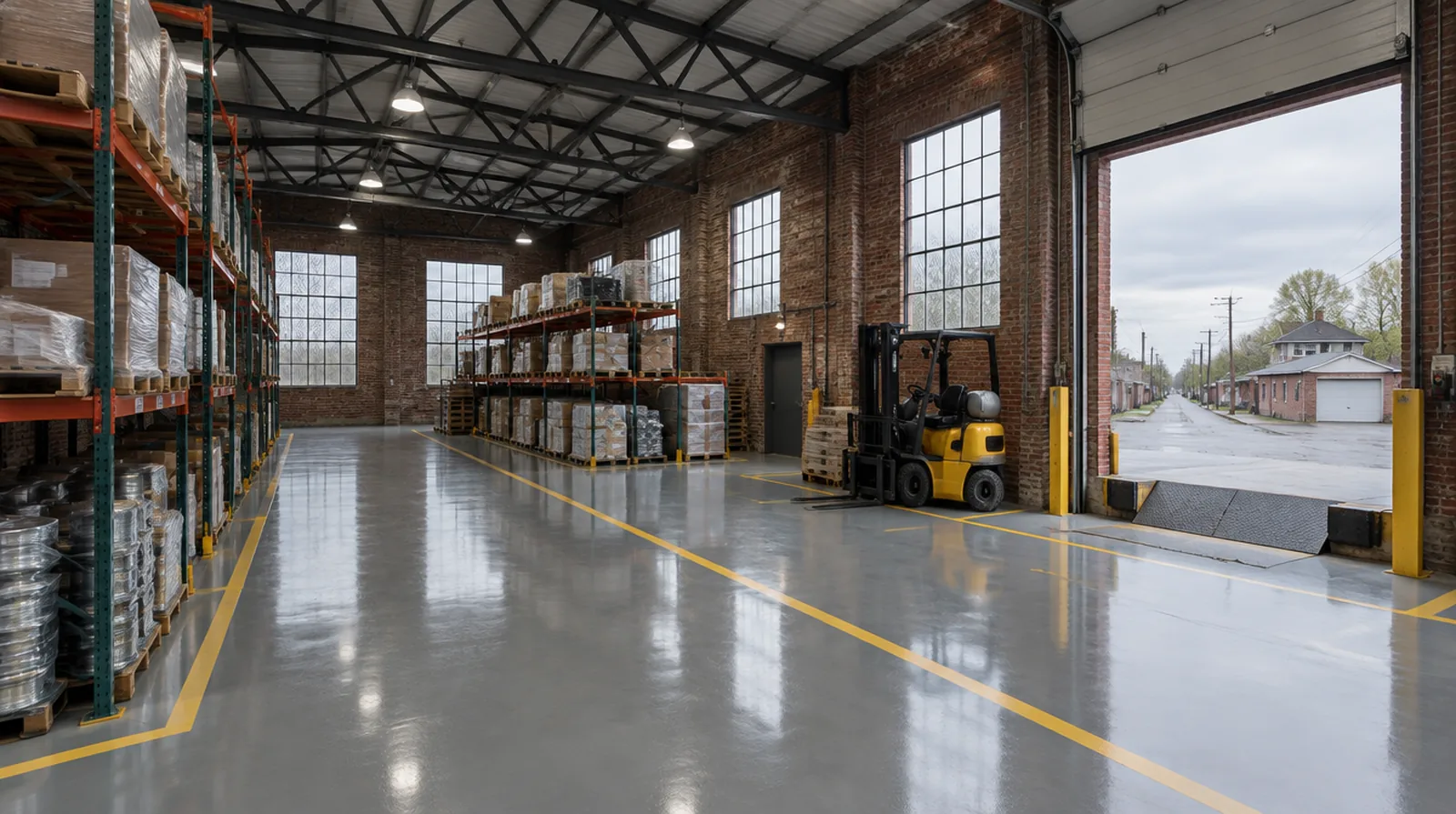
Warehouses and distribution. High-build epoxy with safety striping, thicker in forklift turning areas and at dock doors.
Machine shops and fabrication. Chemical- and impact-resistant systems that handle cutting fluids, oils and dropped parts.
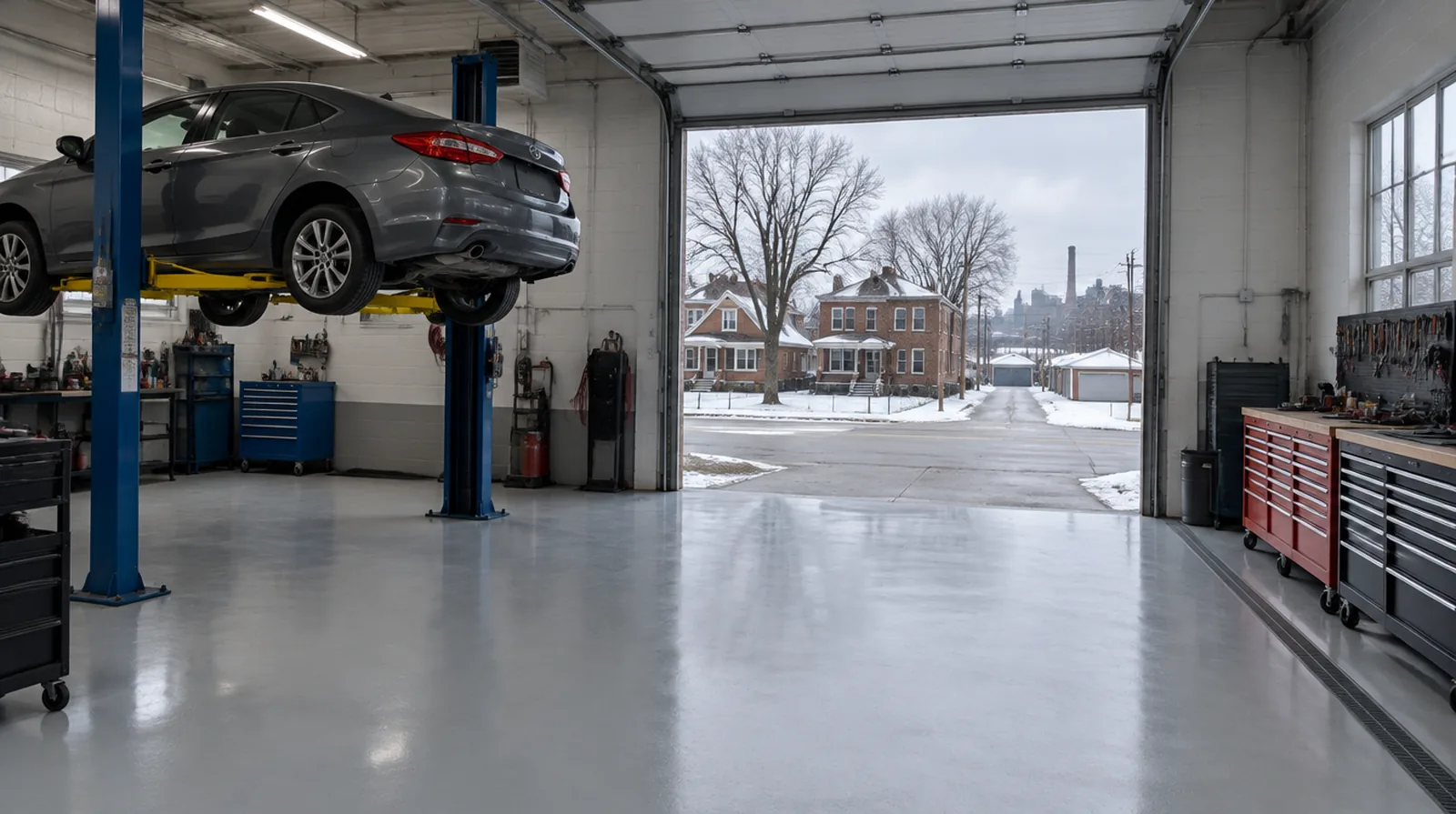
Auto repair and fleet maintenance. Coatings rated for fuels, brake fluid, antifreeze and road salt.
Restaurants and food production. Urethane cement floors with coved bases that handle hot water, grease and thermal shock.
Retail and offices. Decorative flake, quartz, metallic or polished finishes.
Clinics and labs. Seamless, cleanable floors that resist disinfectants.
Preparation for old industrial slabs
Older industrial floors often have embedded oil, old coatings, adhesive, uneven joints and spalled areas. We use walk-behind grinders and shot blasters with industrial dust collection. Oil-soaked areas are degreased or ground out. Cracks and joints are repaired, and damaged areas are rebuilt with epoxy mortar before coating.
Winter considerations
Loading docks, entry doors and vehicle bays see slush and salt daily in winter. We thicken the system in those areas, add aggregate for traction and select resins with high chloride resistance. Cold-tolerant products make winter installation possible in heated buildings.
Keeping your business running
We phase large projects, work nights and weekends and use fast-cure systems so areas return to service quickly. Before starting, we plan routes, ventilation and schedules with you and provide a written plan.
Safety and marking
Safety striping, pedestrian walkways, hazard zones and parking layouts can be built into the floor. Slip resistance is matched to the use, heavier in wet or oily areas and lighter in retail.
Chemical resistance
We review the chemicals your floor will see, from cutting oils and solvents to sanitizers and de-icing salts, and choose resins rated for that exposure. Product data sheets are available for your records.
Maintenance
Resin floors clean easily with auto scrubbers or deck brushes and neutral cleaners. We provide care guidance and can schedule topcoat renewals in high-traffic lanes.
Estimates
We visit, test, measure and discuss your operation before recommending a system. Itemized estimates help owners, landlords and facility managers plan budgets.
Small businesses welcome
We coat single-bay garages, small storefronts and office suites as well as large warehouses. Every project gets the same preparation standards.
Questions
Can you work while we operate? Often, by phasing and working after hours.
How long will it last? Many years with the right system and care.
Can you repair just the worst areas? Yes, though full coating gives more consistent results.
Do you handle food-safe systems? Yes, with materials suited to food environments.
Loading docks and truck bays
Dock areas take the worst abuse in any building. Forklifts brake and turn on the same spots, trucks drag in brine and grit, and dock plates hammer slab edges. We rebuild broken dock edges with epoxy mortar, thicken coatings in the first several feet inside the doors and add heavy aggregate for traction. Armored joints and edge repairs keep the coating from chipping where traffic crosses. A well-built dock floor reduces slip hazards and the constant patching that bare concrete needs.
Older buildings, new uses
Many older industrial buildings are being converted into gyms, breweries, event spaces and maker shops. Each new use brings different floor needs. We help owners choose between coatings and polishing based on the slab's condition and the planned activity.
Restaurants and commercial kitchens
Kitchen floors face hot water, grease, dropped pans and nightly washdowns. Quarry tile grout breaks down and holds bacteria. Urethane cement systems are built for this: they tolerate thermal shock from boiling water and steam cleaning, bond to damp concrete and can be installed with integral coved bases that seal the joint between floor and wall. Textured finishes keep staff footing secure when floors are wet or greasy. We often install kitchen floors over a weekend so restaurants miss as little service as possible.
Request a commercial quote
Call (219) 529-1796 for a free estimate.