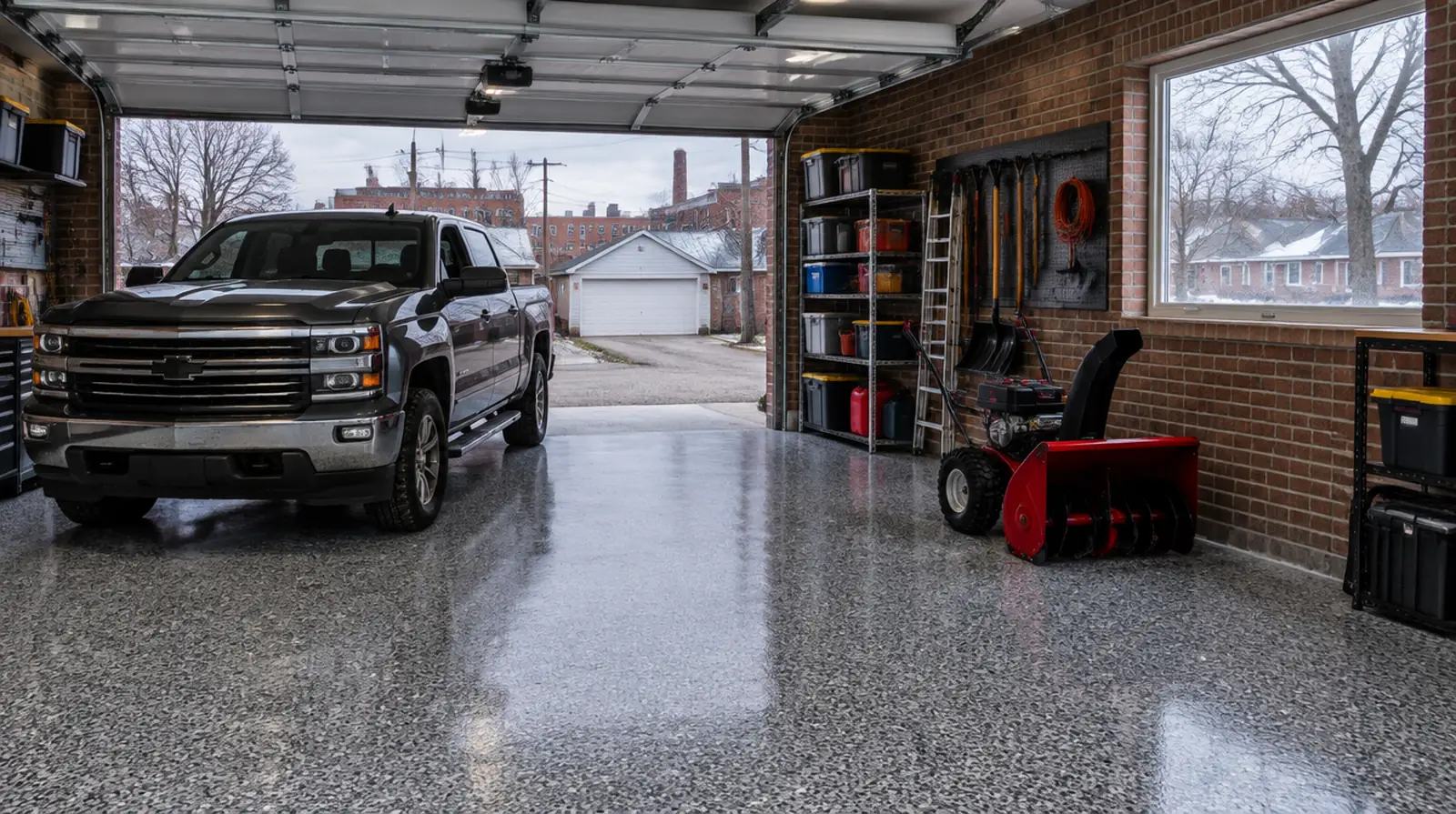
What a flake floor is
A flake floor starts with a ground, repaired and primed slab. A pigmented base coat is rolled out, and while it is still wet, colored vinyl chips are broadcast across it until no base coat shows. After it cures, the loose flakes are scraped and vacuumed away, and one or two clear topcoats lock everything in. The finished floor has a speckled, granite-like look with a slight texture.
Why it suits winter garages
Salt dries into white streaks. Slush leaves gray film. Dirt and sand from the alley get tracked in on tires. On a solid-color floor, all of this is obvious. On a flake floor, the multicolor pattern conceals it until you have time to clean. The texture also helps your shoes grip when the floor is wet with meltwater, and grit can be added to the topcoat for even more traction near the door.
Flake sizes and blends
Chips come in sizes from small to large. Smaller chips create a fine, uniform look. Larger chips are bolder and read clearly across a big garage. Popular blends here include gray, black and white for a classic look; tan, brown and cream for warmer older brick garages; and blue or red accents for a custom touch. We bring sample boards to your garage so you can see them in your own light.
Full broadcast versus partial
A partial broadcast scatters flakes over a solid base, using fewer chips. It is less textured and shows more base color. A full broadcast covers the base completely and gives the best hiding, texture and durability. For garages and workshops, we recommend full broadcast.
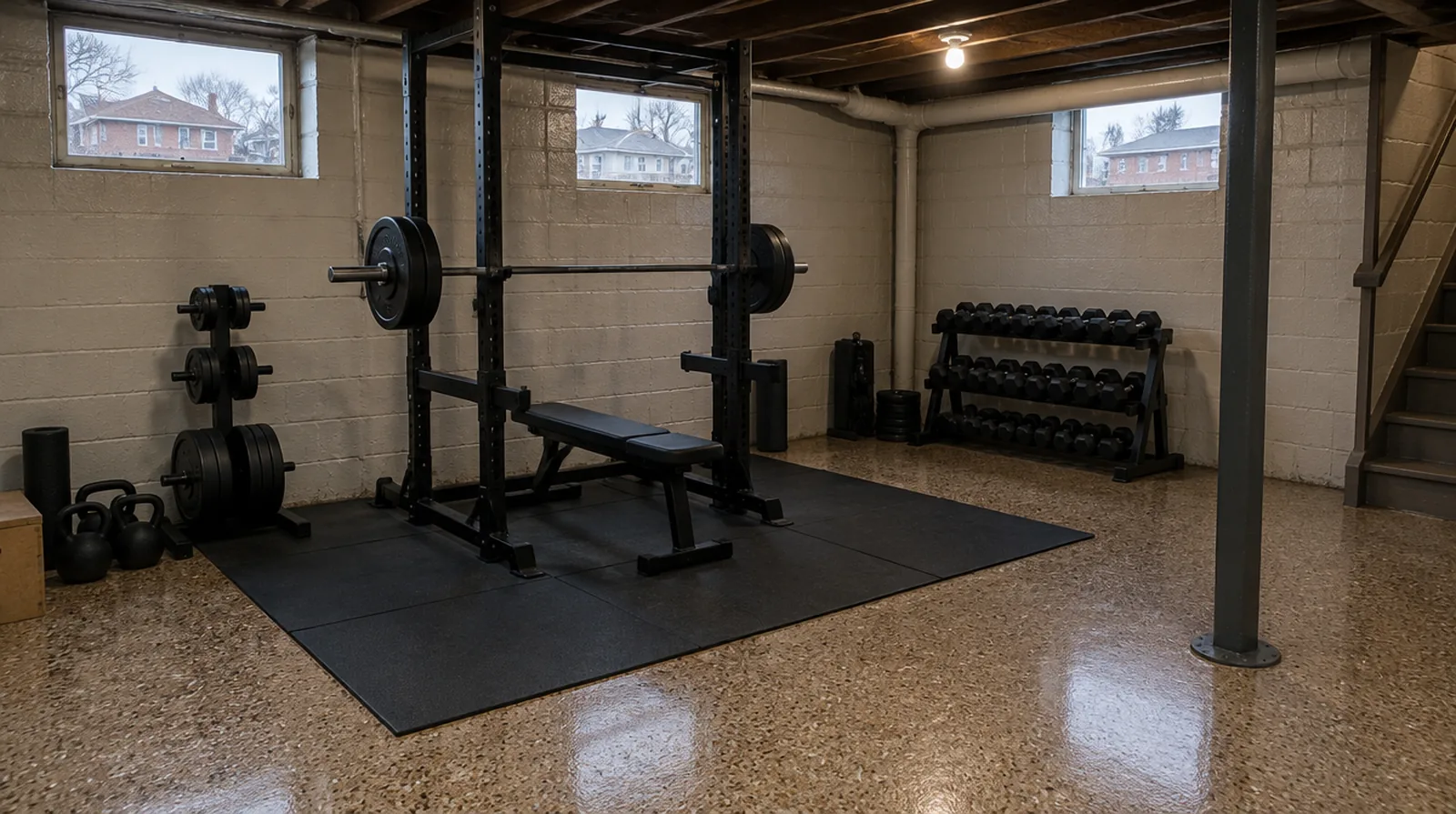
Basements, gyms and workshops
Flake floors are not just for garages. In basements, they turn a dusty slab into a clean, usable space for laundry, storage, gyms and hobby rooms. Basements need a moisture check first, since many older homes here have damp floors in spring. Workshops benefit from the hard surface that resists dropped tools and makes cleanup simple.
Topcoat choices
Clear epoxy topcoats are affordable and hard. Polyaspartic topcoats cure faster, handle a wider range of temperatures and resist yellowing where daylight reaches the floor. For garages with windows or that keep the door open often, polyaspartic is usually worth it.
Preparation is the same
The chips are the visible part, but the floor's lifespan comes from grinding, crack repair, scaling repair and a strong primer bond. We never skip those steps, whether the floor is a small garage or a large shop.
Timeline
A typical two-car garage flake floor takes two to three days with epoxy layers or one to two days with polyaspartic. Cooler weather extends cure times, which we account for in scheduling.
Care
Sweep or dust mop. Rinse winter salt regularly. Clean with a neutral cleaner and a deck brush or soft mop. Avoid harsh acids. Place pads under jack stands and heavy equipment feet.
Questions
Is a flake floor hard to clean? No. The texture is fine enough to mop and squeegee easily.
Will the chips fade? Quality vinyl chips under a UV-stable topcoat keep their color.
Can it go in a basement? Yes, after moisture testing and the right primer.
Can I choose custom colors? Yes, many blends are available.
Two-flats and shared garages
Many properties in town are two-flats or small multi-unit buildings with a shared garage in back. Owners and landlords coat these floors because they hold up to several vehicles, frequent tenant turnover and heavy winter use. A flake floor stays presentable between tenants and cleans quickly before a new lease begins. We can mark parking spaces with striping or contrasting flake bands if helpful.
Pick a flake blend
Call (219) 529-1796 for a free estimate.