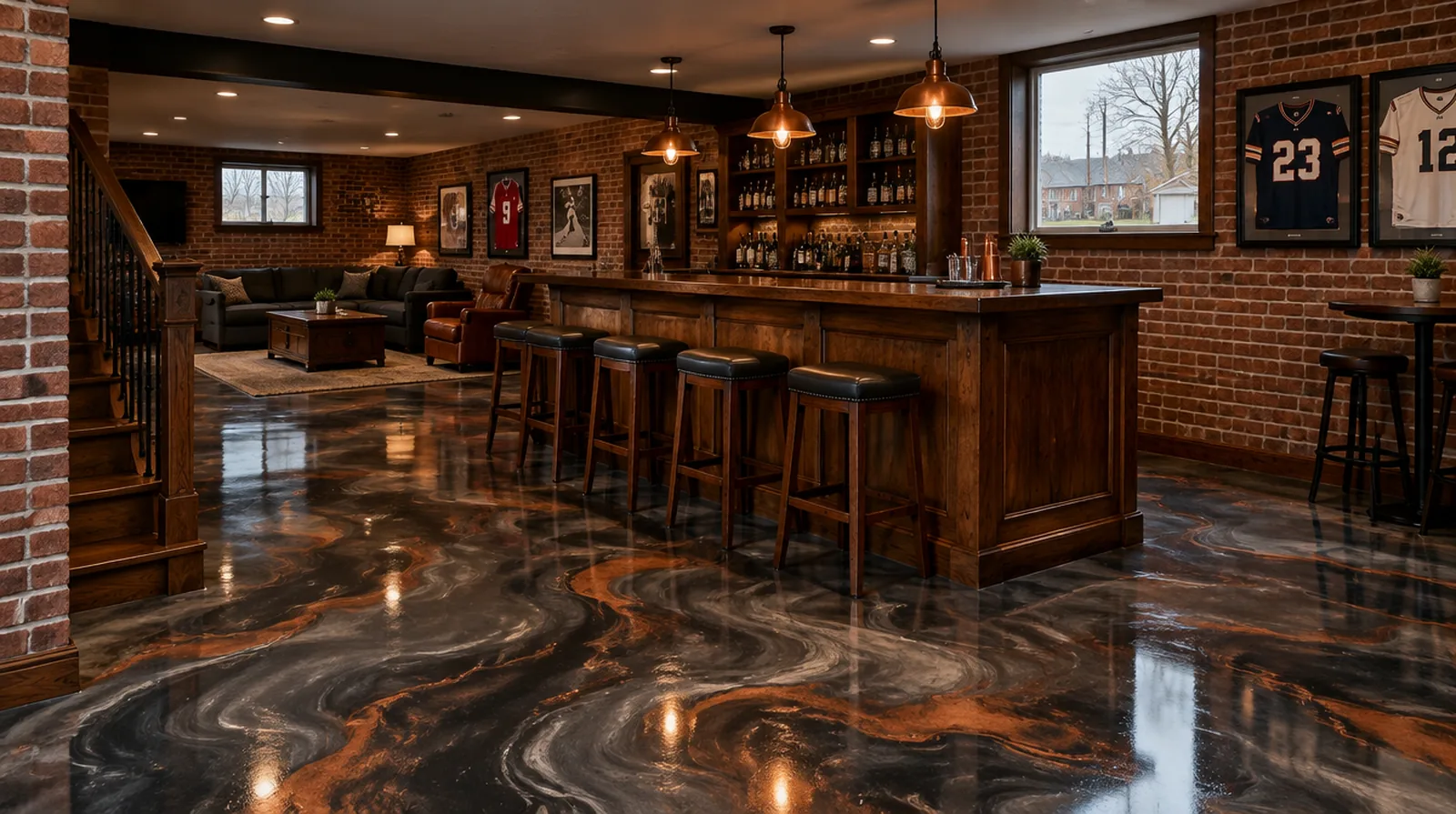
A floor that becomes the focal point
Metallic epoxy uses reflective pigments suspended in clear resin. As our installers work the material, the pigment moves and settles into ripples, swirls and veining. Light catches it differently from every angle, so the floor seems to have depth and motion. No two floors look the same.
Metallic floors are popular in finished basements, home bars, theater rooms, salons, showrooms, offices and restaurants. They transform plain concrete into a feature that people notice the moment they walk in.
Basements first need a moisture check
Many metallic floors here go into basements. Older homes in town often have basement slabs without a vapor barrier, and the water table rises in spring. Moisture pushing up through the slab can cause blisters and delamination in any coating. We test before quoting and use vapor-tolerant primers when readings call for them. If there is active water seepage at walls or cracks, drainage repairs must come first.
Preparation for a glossy finish
Glossy surfaces show every imperfection. Old basement slabs often have patches, tile mastic, paint, pits and uneven areas. We grind thoroughly, remove adhesives, fill cracks and pits and apply a skim coat to level the floor where needed. That base is what makes the finished metallic floor look smooth and continuous.
How the pour works
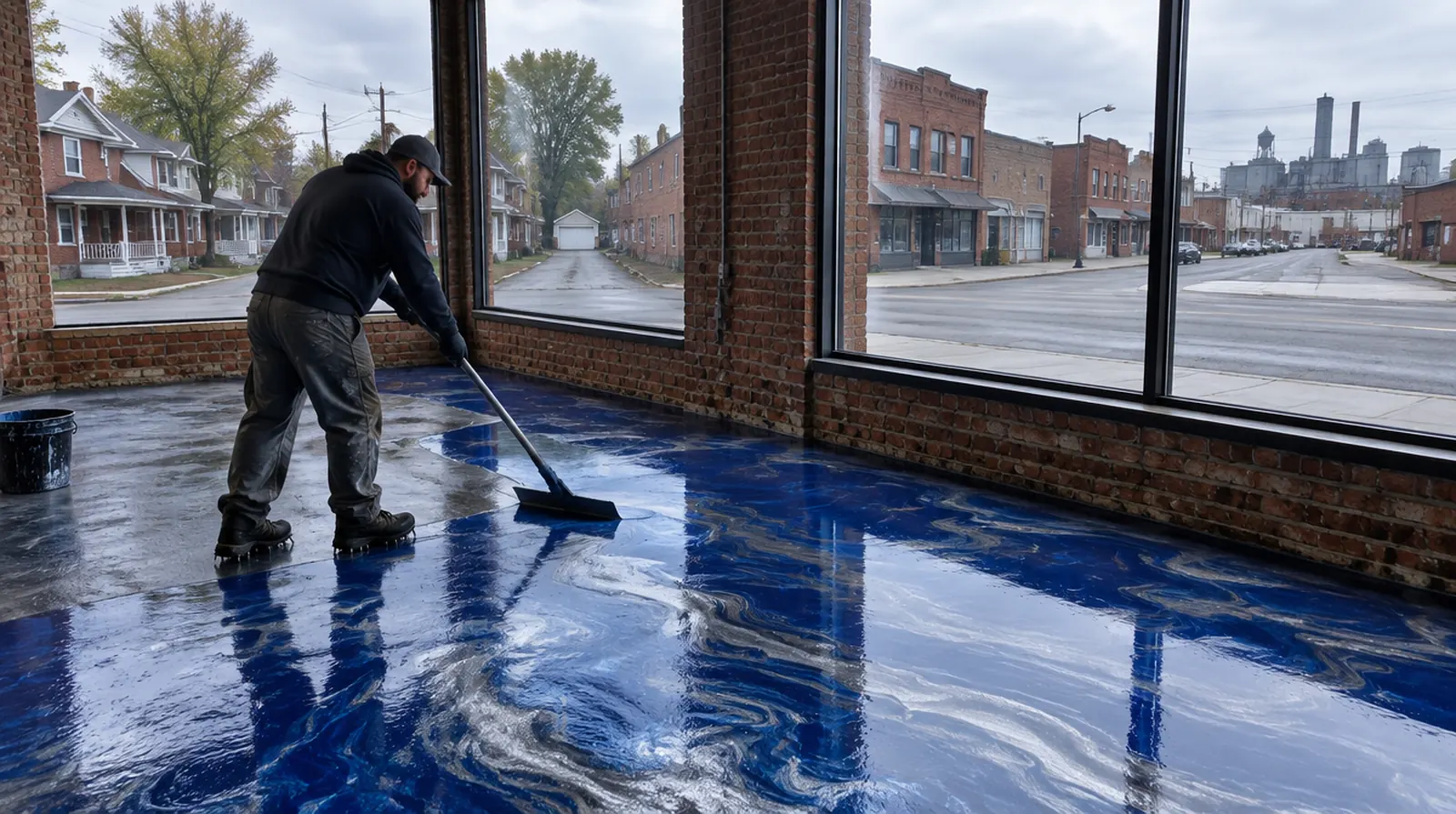
After priming, we apply a tinted base coat that sets the background. The metallic coat is mixed in batches and applied section by section, then manipulated with rollers, trowels, brushes and sometimes air or solvent to create movement. We review reference photos with you beforehand so the result matches what you want. A clear topcoat adds scratch resistance and seals the design.
Color ideas
Charcoal and silver for a modern basement. Copper and bronze over black for a warm bar. White with gray veins for a marble look. Deep blue with silver for a dramatic showroom. Team colors are possible for game rooms. We show samples on boards before you decide.
Temperature control
Metallic epoxy needs stable temperatures to flow and level properly. In winter, basements are often warm enough, but we monitor slab and air temperature and run heaters when necessary. Drafts can affect the pattern, so we close off the space during installation.
Where metallic works best
Interiors with moderate traffic are ideal. In garages, metallic floors look striking but show scratches and salt more than flake floors. Because the surface is smooth, it can be slippery when wet. For entries and commercial spaces, we add a fine anti-slip additive to the topcoat.
Commercial metallic floors
Storefronts along older commercial corridors, salons, restaurants and showrooms use metallic floors to stand out. In these spaces we choose tougher urethane topcoats for heavier traffic and plan installation so businesses lose as little time as possible.
Timeline
Expect three to four days, including preparation, priming, base coat, metallic layer and topcoat. Light foot traffic is usually fine a day after the final coat, furniture in two to three days and full cure in about a week.
Cost
Metallic floors cost more than standard coatings because of material cost and skilled labor. Area, preparation, moisture mitigation and design complexity determine price.
Care
Dust mop regularly, clean with a neutral cleaner and microfiber mop, use felt pads under furniture and mats at entrances. A fresh topcoat later restores gloss.
Questions
Can I see my pattern beforehand? Samples and photos give a good idea, though each floor is unique.
Is it durable? Yes, with a quality topcoat and basic care.
Can you install over tile? We remove tile for the best bond.
Plan a metallic floor
Call (219) 529-1796 for a free estimate.