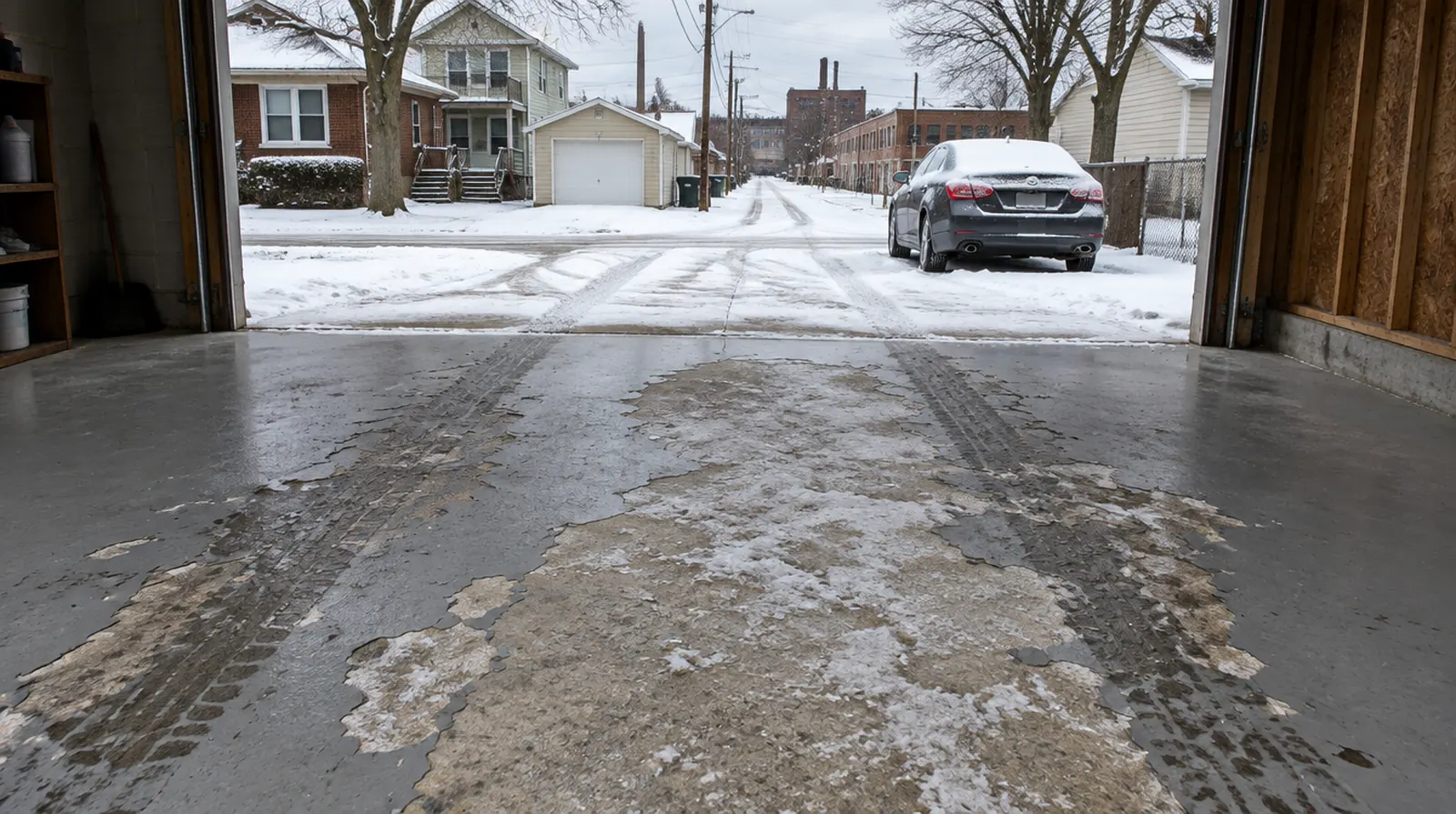
Why floors fail here
The most common failures we see are kit coatings peeling along tire paths, paint flaking under winter traffic and concrete scaling from salt. Causes include poor preparation, such as acid etching or simple cleaning instead of grinding; coatings too thin to resist hot tires; moisture pushing up through slabs; and salt water working into cracks and under coating edges. Freeze-thaw cycles then widen every weakness.
Diagnosis first
Before quoting repairs, we inspect the floor, test bond strength around failures, check moisture and look at drainage and slope. We explain what caused the failure and recommend repair, recoat or full replacement.
Repair options
Spot repairs. For small, isolated damage, we cut back to bonded coating, grind, prime and rebuild the area to blend as closely as possible.
Recoats. When the floor is bonded but worn, we abrade it and apply a new topcoat, often polyaspartic.
Full removal and replacement. When failure is widespread, we grind off the old coating and install a complete new system.
Repairing salt-scaled concrete
Scaling leaves a rough, flaking surface, often worst near the garage door where slush drips from cars. We grind away loose material, then rebuild the surface with a polymer-modified skim coat or epoxy mortar. Once restored, the slab is primed and coated so salt cannot reach it again. Severe scaling that extends deep into the slab may require partial replacement, which we will tell you about honestly.
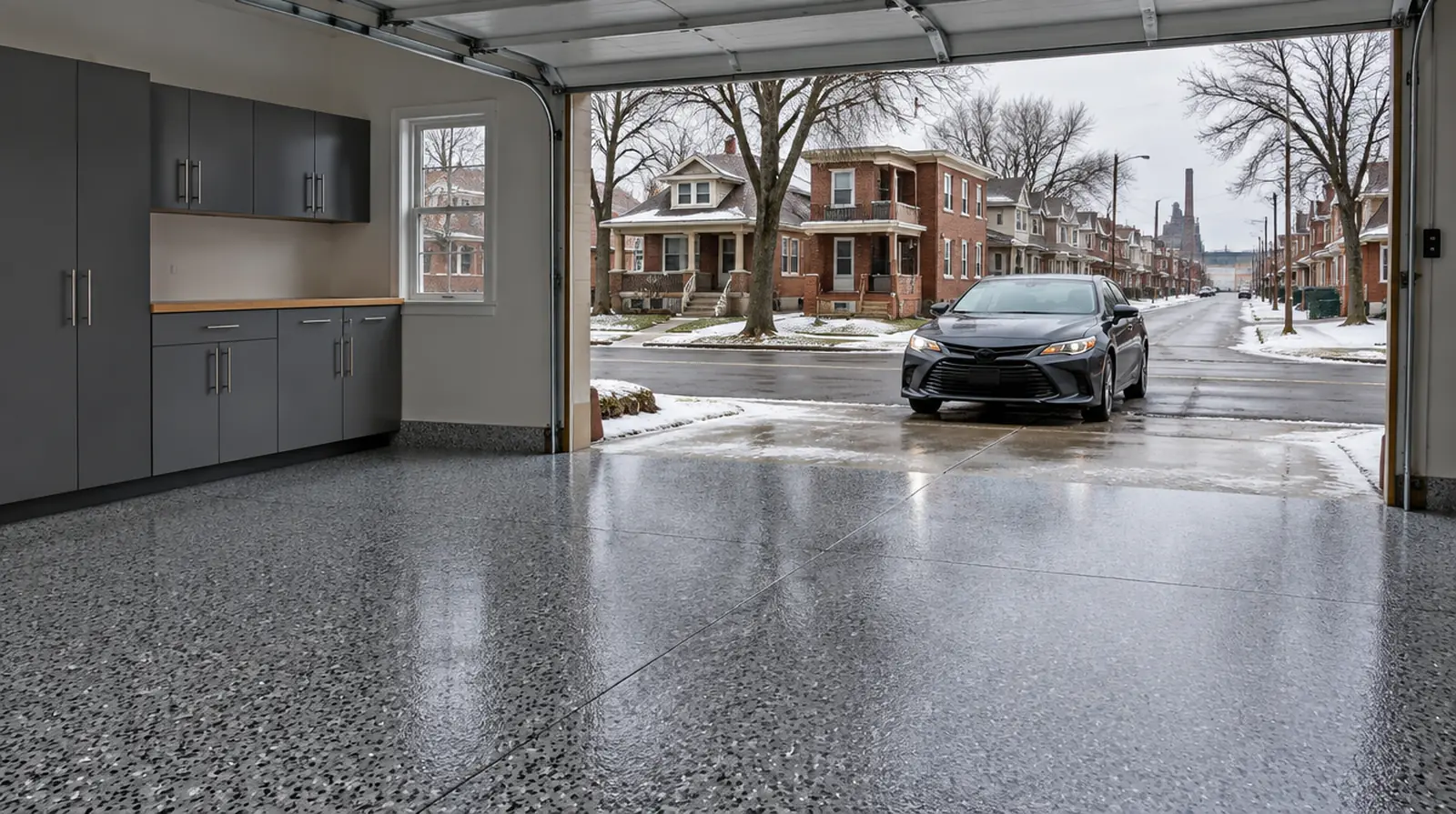
Cracks and spalled edges
Cracks are routed and filled with flexible polyurea or rigid epoxy depending on movement. Spalled edges at door thresholds, where the slab meets the driveway apron, are rebuilt with epoxy mortar so the coating has a solid edge.
Fixing do-it-yourself kits
Kit coatings are thin and usually rolled onto unground concrete. They lift under hot tires and peel when salt water gets underneath. Grinding the remains away and installing a professional system is the reliable fix.
Matching existing floors
Exact matches on aged floors are hard. Where a repair would be obvious, we may suggest recoating the whole floor or adding a border to disguise transitions.
Preventing repeat damage
Squeegee meltwater out often, rinse salt residue, use mats and fix drainage that sends water across the floor. A topcoat refresh every several years extends the life of the system.
Timing repairs before winter
The best time for repairs is late summer and early fall, before salt season. Small problems grow quickly once freeze-thaw cycles begin. Scheduling early also gives epoxy systems warmer temperatures for proper cure.
Timeline and cost
Spot repairs often take one day. Recoats take one to two days. Full replacement follows new installation timelines. We provide options at different budget levels.
Questions
Can you coat over my peeling floor? No. New coating over failing material fails with it.
Is my scaled floor too far gone? Most can be repaired; we will assess.
Do you repair floors installed by others? Yes.
Hot tire lift and tire path wear
A telltale sign of a weak coating is a pair of bare stripes where the car parks. Hot tires soften thin films, and when the car leaves, the coating sticks to the rubber and pulls away. Salt water then wicks under the edges and lifts more. The repair is to remove the failing coating completely, grind the slab to a proper profile and install a system with enough thickness and adhesion to stay put. Once corrected, tire lift does not return.
Basement floor repairs
Basement coatings usually fail from moisture. We test, remove failing material and apply vapor-tolerant primers before recoating.
Get my floor inspected
Call (219) 529-1796 for a free estimate.