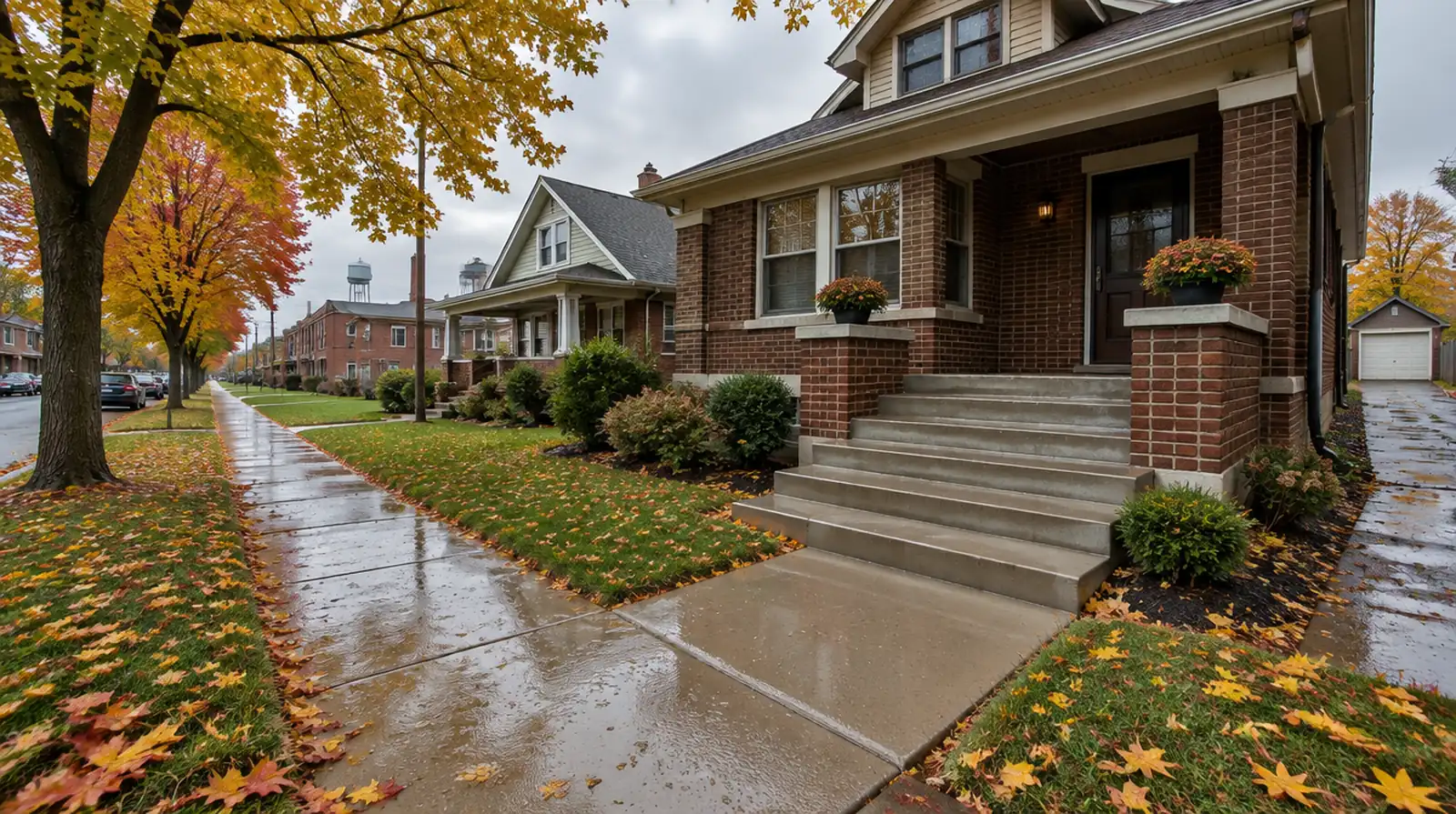
Salt and freeze-thaw damage
Outdoor concrete here faces constant winter abuse. De-icing salt dissolves into brine that soaks into driveways, sidewalks, steps and patios. When temperatures fall, that water freezes and expands, pushing the surface apart. Over a few winters, the result is scaling, pitting and exposed aggregate. Salt also corrodes reinforcement and can crack the concrete from inside.
What sealing does
A penetrating sealer reduces how much water and salt the concrete absorbs. Less absorption means less freeze-thaw damage, less scaling and fewer stains. Sealing is one of the most cost-effective ways to extend the life of outdoor concrete, especially newer slabs that have not yet been damaged.
Choosing the right sealer
Silane and siloxane penetrating sealers. These soak into the concrete and react to form a water-repellent barrier inside the pores. They do not change the look or traction of the surface and do not peel. They are our first choice for driveways, walks and steps exposed to salt.
Acrylic sealers. These form a film that adds sheen and color enhancement. They suit decorative and stamped concrete but wear faster and can be slippery when wet. We use them selectively.
Coatings. For covered patios and porches, a flake system with grit is another option.
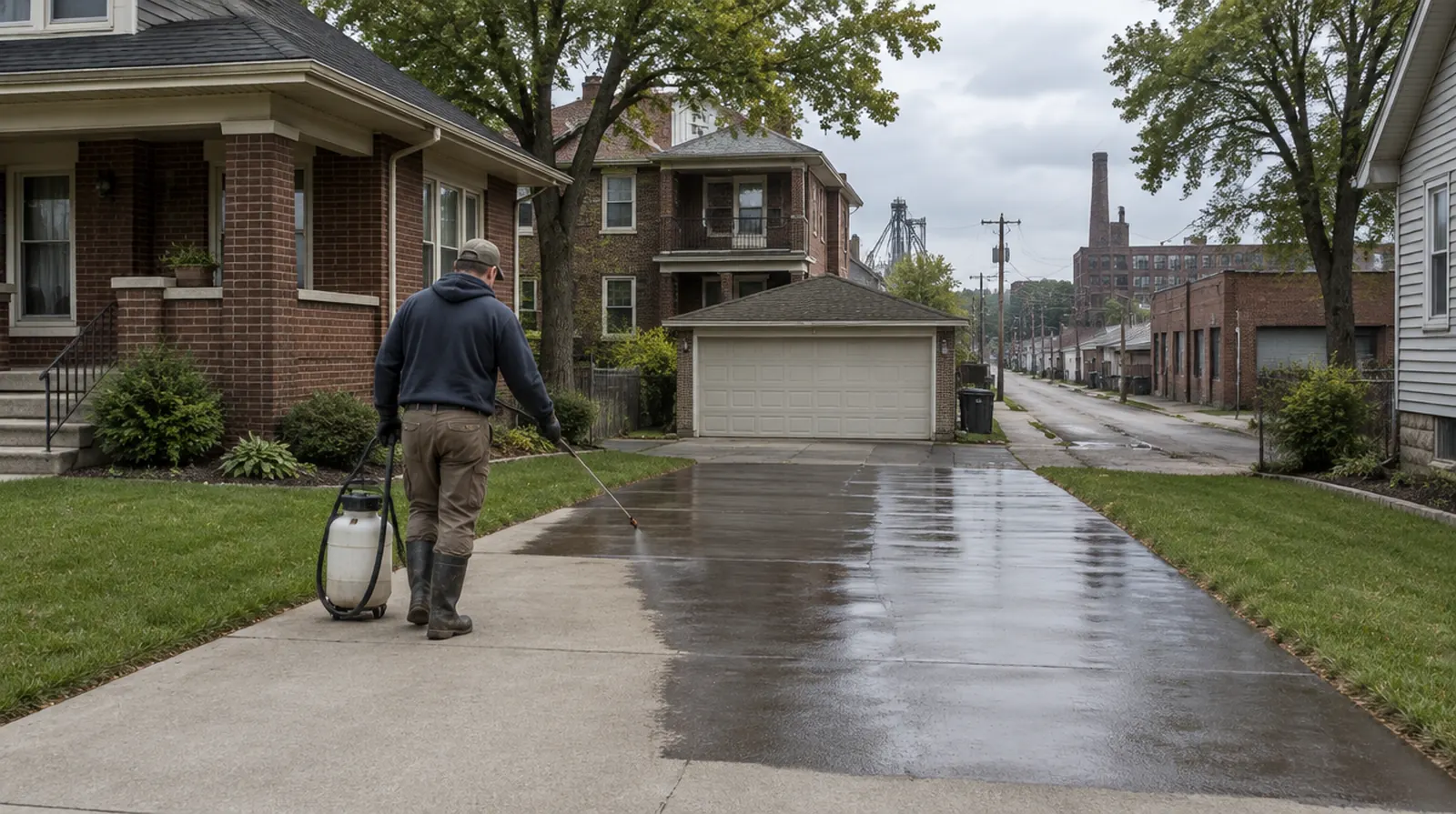
Preparation
We pressure wash, remove oil and rust stains where possible, treat mildew and let the surface dry. Sealer must go on clean, dry concrete above minimum temperatures, so timing matters. Late summer and early fall are ideal for sealing before winter.
What we seal
Driveways, aprons, sidewalks, front steps, porches, patios, pool decks, garage floors, retaining walls and decorative concrete. We also seal commercial walks and parking areas.
New concrete
New concrete is especially vulnerable to salt in its first winters. We recommend sealing new driveways and walks once they have cured, typically after about a month, and before the first salt exposure.
How often to reseal
Penetrating sealers typically last several years before water stops beading. Resealing is simple and less expensive because the surface is easier to clean.
Winter tips
Shovel early so less salt is needed. Use sand for traction where possible. Avoid ammonium-based de-icers, which are harsh on concrete. Rinse heavy salt residue off in spring.
Cost
Sealing is affordable compared to repairing or replacing concrete. Price depends on area, cleaning needs and product.
Questions
Will sealer make my steps slippery? Penetrating sealers keep the original texture.
Can sealing fix existing scaling? It slows further damage. Repair or resurfacing restores the surface.
When should I seal? Late summer or early fall is ideal.
Garage floors and aprons
The garage apron, the strip of concrete just outside the overhead door, takes the most salt of any surface on a property. Slush drips off cars as they pull in and pools there. A penetrating sealer on the apron, combined with a coated garage floor inside, protects the most vulnerable concrete. For bare garage floors that are not ready for a full coating, a penetrating sealer is a sensible first step that slows salt damage.
Commercial walks and entries
Businesses salt their walks heavily to keep customers safe. Sealing those walks each fall slows scaling and keeps entries looking cared for.
How sealing fits a Hammond maintenance plan
A sealer is not a one-time purchase. On driveways and walks that see plows and salt every winter, we plan a reseal every two to three years, timed for late spring or early fall when slabs are dry and overnight temperatures stay above fifty degrees. Interior basement and shop floors last far longer because they avoid ultraviolet light and brine. We write the recommended interval on your estimate so you know what to expect.
Before any reseal we do a simple water drop test. If beads still form, the existing coat is working and we leave it alone. If water darkens the surface within a minute, it is time. That small check keeps you from paying for product the slab does not need yet.
Schedule concrete sealing
Call (219) 529-1796 for a free estimate.