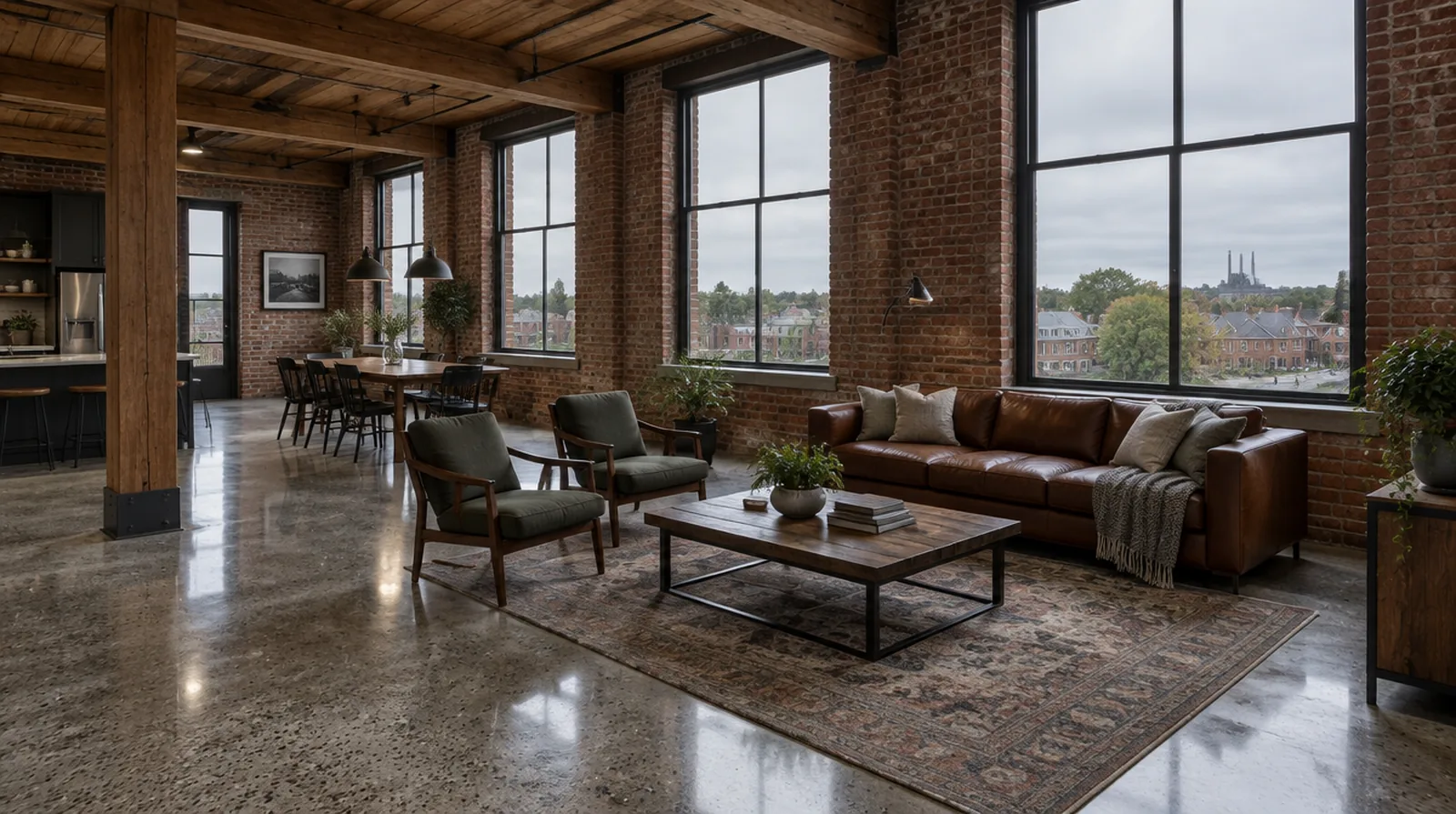
What polished concrete is
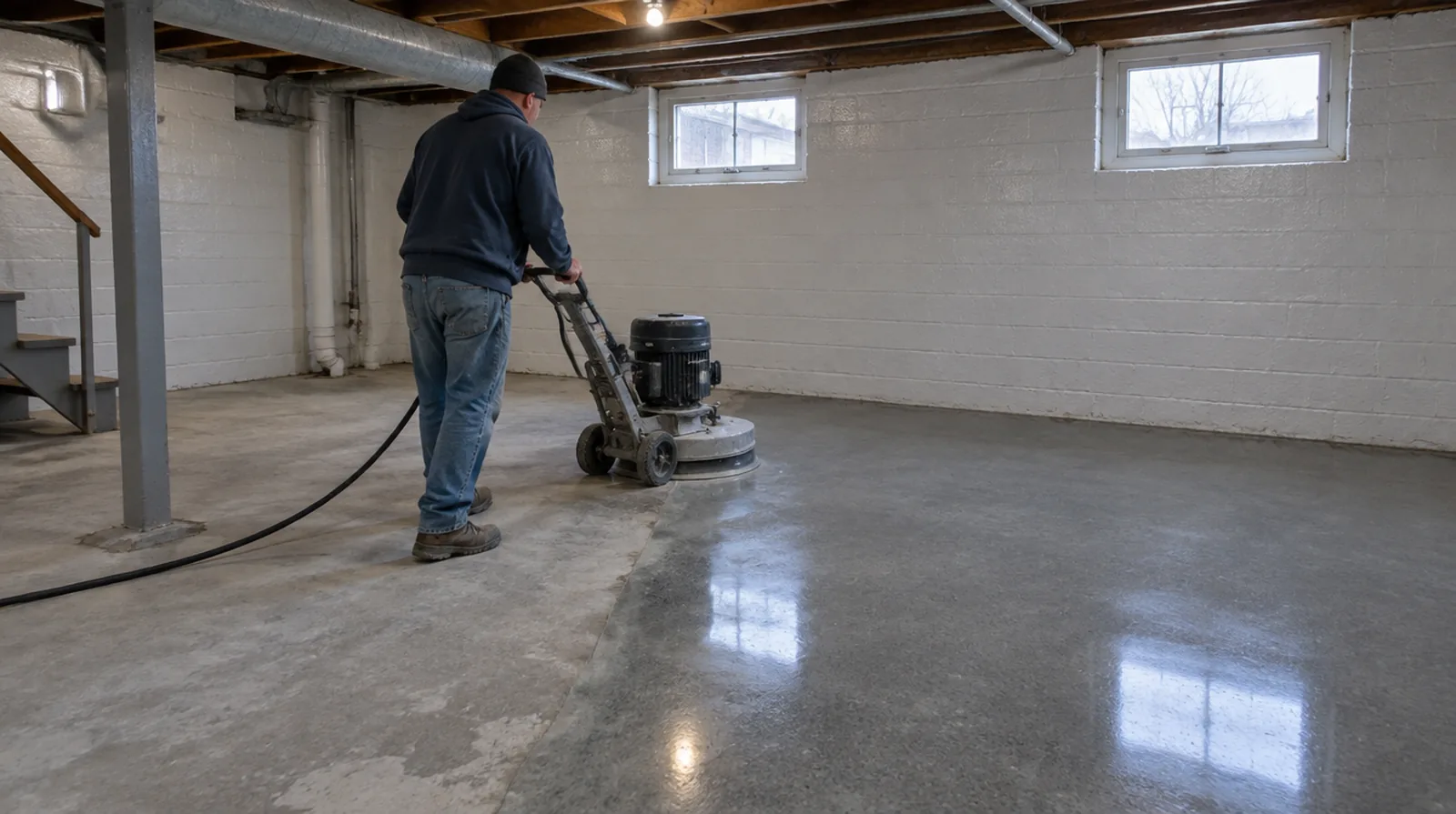
Polished concrete is not a coating. The slab itself is ground flat, hardened with a densifier and polished with progressively finer diamonds until it reflects light. Because there is nothing on the surface to peel, it is extremely durable and easy to maintain.
Polished floors work well in basements, converted lofts, offices, retail stores, restaurants, warehouses and community buildings.
Our process
Removal. Tile, carpet glue, paint and old coatings are ground away.
Grinding. Metal-bond diamonds flatten the surface and expose the level of aggregate you want.
Repairs. Cracks and pits are filled with color-matched material.
Densifying. A silicate densifier hardens the concrete and reduces dusting.
Polishing. Resin-bond diamonds refine the surface to satin, semi-gloss or high gloss.
Guard. A penetrating guard adds stain resistance.
Looks to choose from
Cream finish keeps a smooth, uniform look. Salt and pepper exposes fine aggregate. Full exposure shows larger stones. Dyes add warm or cool color. Older slabs often reveal interesting aggregate and character marks that many owners love.
Basements and moisture
Polished concrete is breathable, so moisture vapor can pass through without lifting anything. That makes it a strong choice for basements where coatings might struggle. Efflorescence can appear as white haze on very damp slabs; it cleans off and does not cause failure.
Old brick buildings and lofts
Older commercial buildings along the main corridors often have thick, well-cured slabs under layers of tile and carpet. Polishing these floors brings out their history and suits the exposed brick and timber common in renovations. Glue lines and old patches may leave faint shadows, which many owners appreciate as character.
Where polished is not ideal
Garages with heavy salt and oil exposure are better served by a garage coating, since polished concrete is still porous enough to absorb brine over time. Slabs with severe scaling or structural damage may need repair before polishing.
Traction
Dry polished concrete has good traction. Any smooth floor can become slippery when wet, so we keep entry areas at a lower sheen and recommend mats where snow and slush are tracked in.
Timeline
A typical basement takes two to four days. Commercial floors can be phased. There is no cure time; the floor is ready when polishing ends.
Cost
Price depends on area, removal work, repairs, aggregate exposure, dye and sheen. Long-term cost is low because polished floors rarely need replacing.
Care
Dust mop and clean with a neutral cleaner. Avoid acidic cleaners and de-icing salt residue sitting on the floor. Burnish periodically and reapply guard every few years.
Questions
Is it cold underfoot? It can feel cool in winter. Area rugs and radiant heat help.
Can old slabs be polished? Most sound slabs can.
Is it dusty? No. Densifiers stop concrete dusting.
Retail and office spaces
Polished floors are a popular choice for storefronts, offices and showrooms because they look clean and professional, reflect light and need only routine dust mopping and auto scrubbing. There is no wax to strip and no coating to wear through. For businesses that lease older buildings, removing tired carpet or tile and polishing the slab can modernize a space at a reasonable cost. We can phase work around business hours and use dust collection to keep the space clean.
Grind and seal alternative
Where a full polish is not needed, a grind and seal option exposes aggregate and adds a clear sealer for a decorative look at lower cost. It requires more frequent resealing than a true polished floor.
Plan a polished floor
Call (219) 529-1796 for a free estimate.