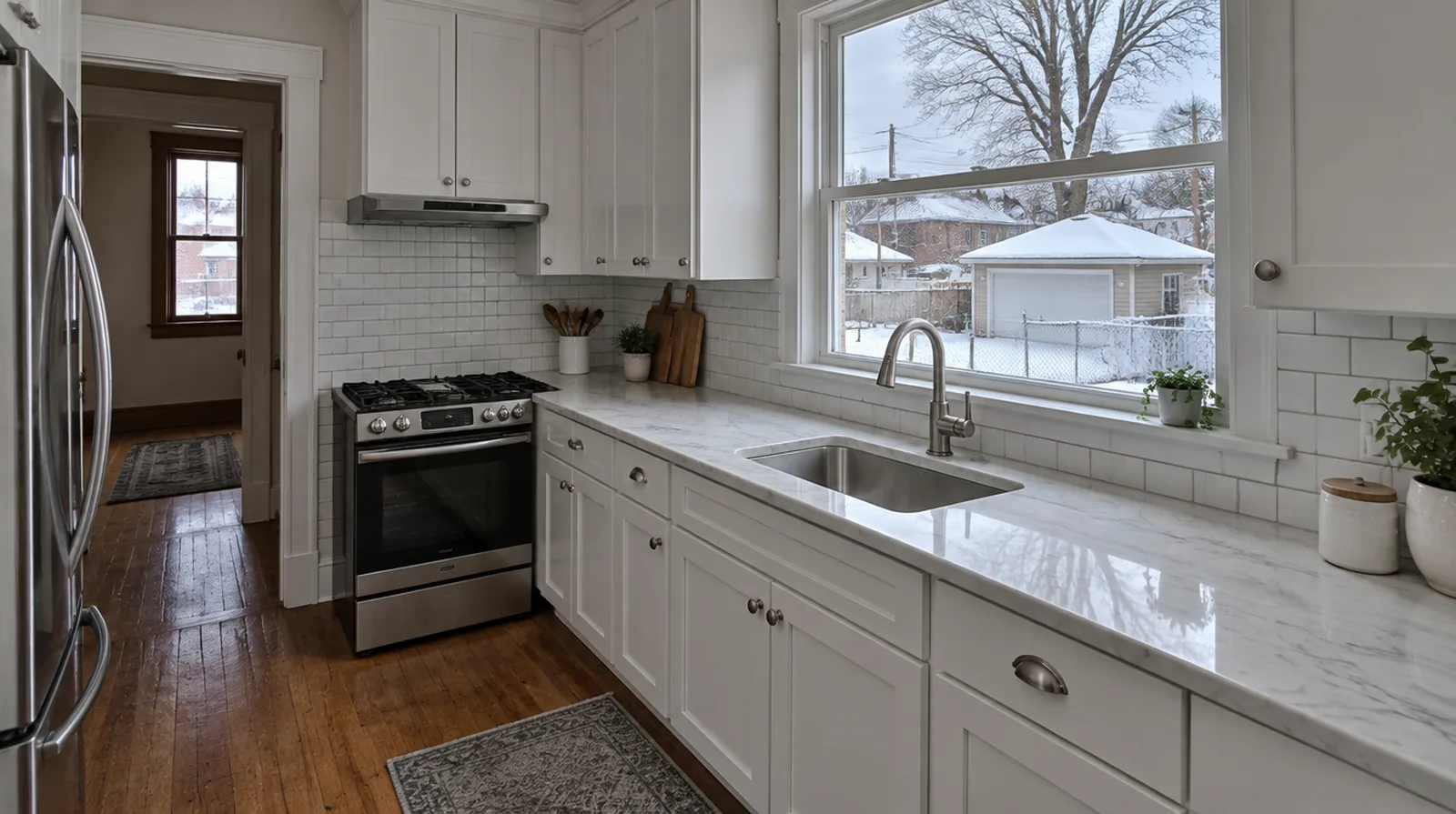
New countertops without demolition
Epoxy countertops are poured over existing surfaces, creating a seamless, glossy top. Laminate, tile and old solid-surface counters can often be coated rather than removed, saving the expense and mess of tear-out. The resin can mimic marble, granite or quartz, display bold colors or encase wood in a deep clear layer.
Our process
We protect cabinets, floors and walls, remove sinks and fixtures where necessary, repair and sand the substrate and prime it. A base coat goes down, followed by decorative pigments shaped with brushes, heat and tools. A flood coat creates a smooth, deep finish. Edges are dressed by hand, and fixtures are reinstalled after cure.
Temperature and cure
Resin pours need stable warm temperatures. In winter we keep the room heated and draft-free so the surface cures clear and level. Cold drafts can cause waves or haze, so we close off the space during the pour.
Design ideas
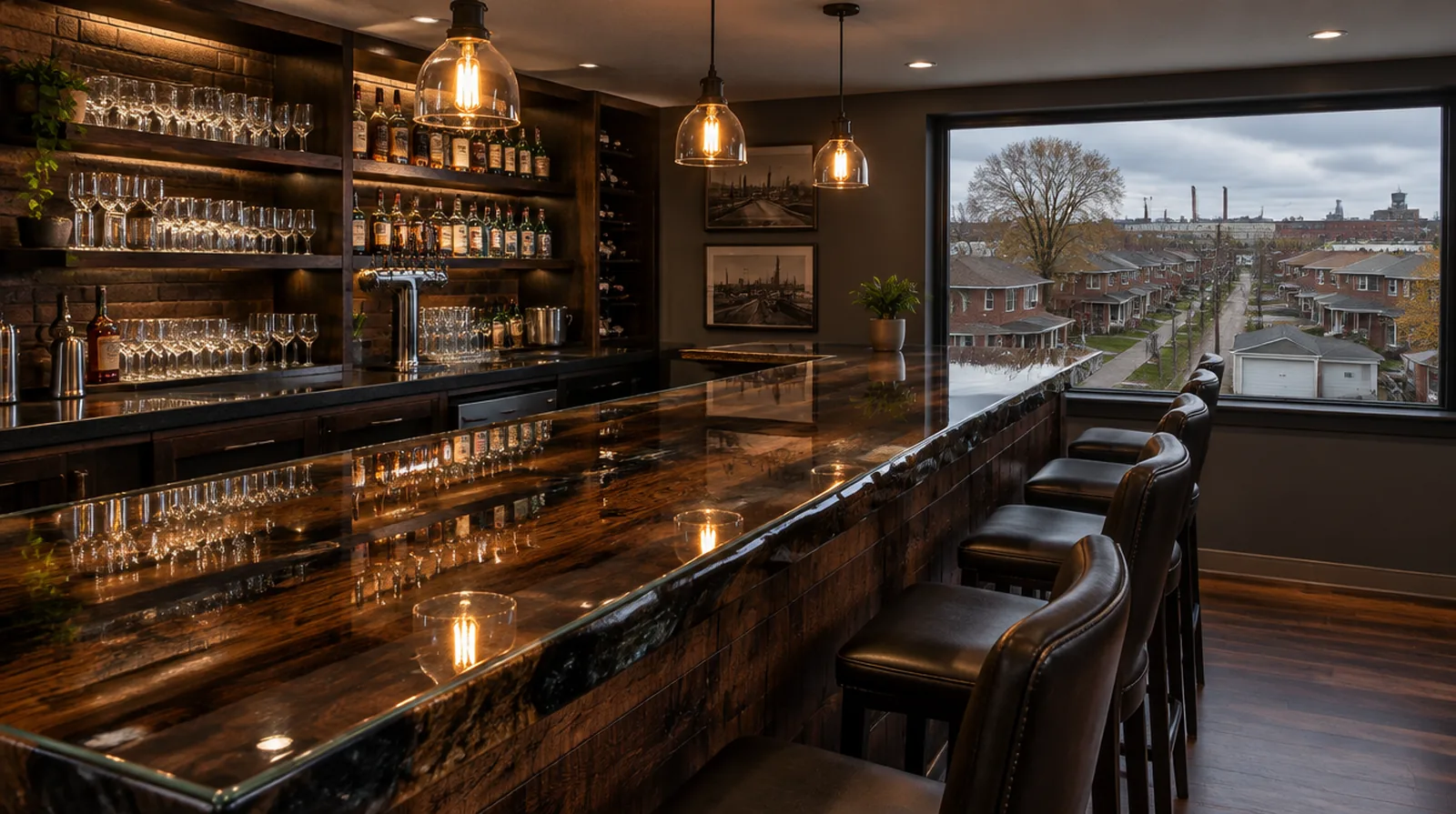
White marble with gray or gold veining. Black granite looks with silver flecks. Concrete gray for a modern style. Clear resin over walnut or oak for bars. Solid colors for laundry and utility counters. Samples are available before work begins.
Basement bars and game rooms
Finished basements here often feature a home bar. A thick clear epoxy over wood, or a metallic pour that matches a metallic floor, creates a durable, glossy bar top that resists spills and is easy to clean.
Garage and workshop benches
Plywood workbenches soak up oil, paint and glue. An epoxy coat seals them and creates a hard top that wipes clean. Paired with a coated garage floor, it completes a clean workspace.
Durability and care
Cured epoxy resists water and most household stains. It is not a cutting surface and can be marked by hot pans, so use boards and trivets. Clean with mild soap and water. Fine scratches can be polished, and a new flood coat can renew it later.
Timeline
Most kitchens take two to three days, with counters usable after about a day of cure and fully hard in about a week.
Cost
Coating existing counters typically costs less than replacing them with stone. Price depends on area, edges, design and substrate repairs.
Bathrooms and vanities
Dated bathroom vanities with cracked laminate or tile can be renewed with a seamless resin top that resists water and wipes clean. Integrated backsplashes reduce joints where water can get in.
Questions
Can you pour over tile? Yes, after filling grout lines.
Is it food safe? Fully cured resin is commonly used for food prep areas.
Will it yellow? Indoors with UV-resistant resin, yellowing is minimal.
Can it be repaired? Yes, by sanding and recoating.
Caring for an epoxy countertop
Daily care is simple: warm water, mild dish soap and a soft cloth. Skip abrasive powders and green scrub pads, which dull the gloss over time. Use trivets under pots straight off the stove and boards under knives, the same habits you would keep with most stone tops. Small surface scratches can be buffed out, and a worn top can be lightly sanded and recoated rather than replaced.
We also talk through placement before we pour. Tops near a sunny window can receive a UV resistant topcoat to slow yellowing, and bar tops or laundry counters can be given a slightly textured finish where spills are common. Every color choice is mixed and approved on a sample board first, so the finished surface matches what you picked.
Most countertop projects take two to three days on site, including prep, the pour and a cure period before light use. We protect cabinets and floors during the work and leave the room clean.
Plan a countertop pour
Call (219) 529-1796 for a free estimate.