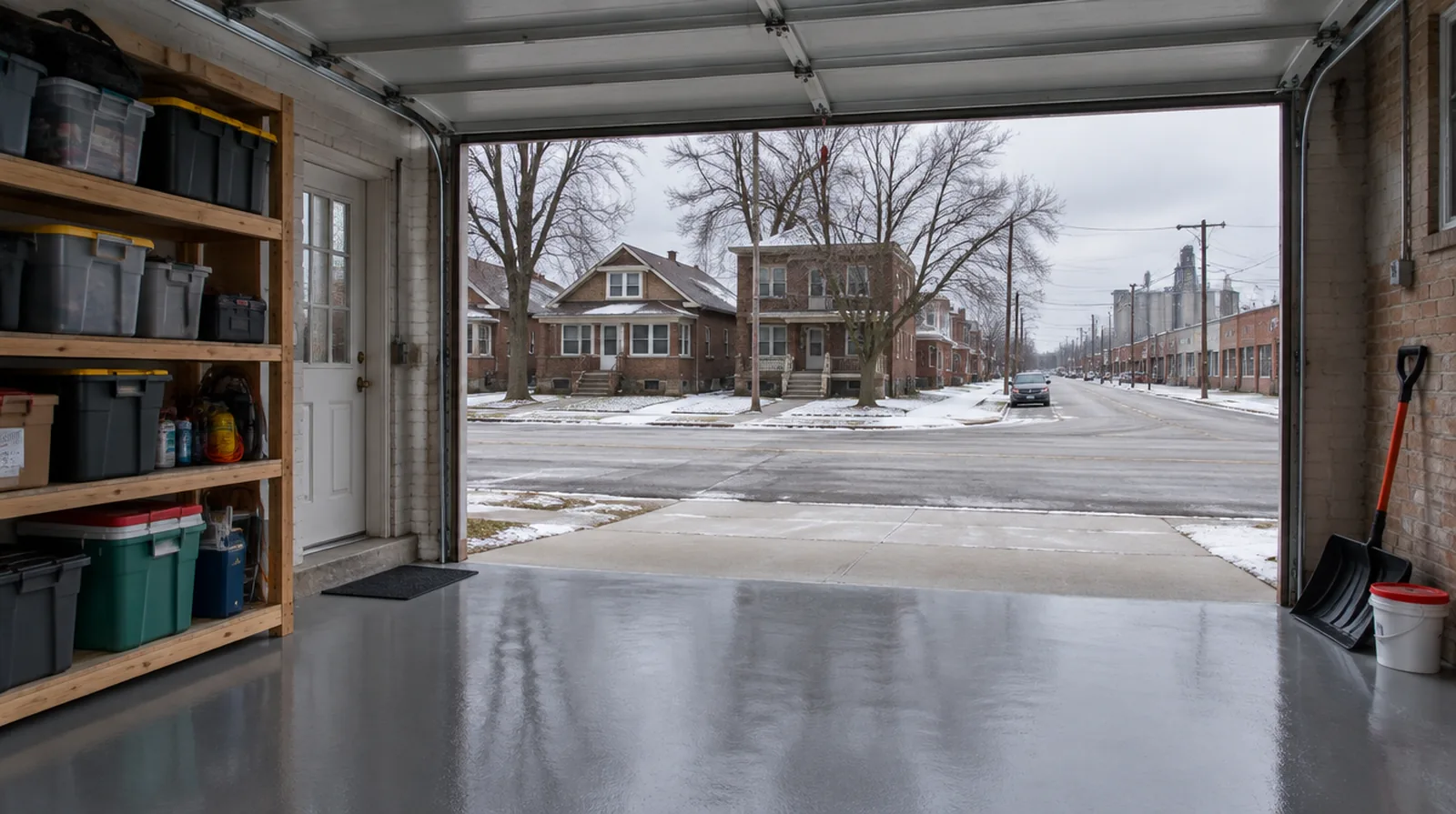
Why garage floors wear out here
Garages in town take a beating every winter. Cars come in coated with brine and packed slush. As it melts, salty water runs across the floor, soaks into the concrete and refreezes on cold nights. The freeze-thaw cycle pops the surface into flakes, leaves white residue and rusts anything metal it touches. Add oil drips, antifreeze and dropped tools, and an untreated garage floor deteriorates year after year.
A professionally installed epoxy floor stops that cycle. The bonded coating seals the surface, so salt water stays on top where it can be pushed out the door. It resists automotive fluids, cleans easily and brightens the whole garage.
Our garage floor system
Inspection and testing. We look at cracks, scaling, previous coatings and oil saturation and check moisture, especially in garages with poor drainage.
Grinding. Planetary diamond grinders remove the weak surface layer, old paint and contamination. Dust extractors keep the work area clean.
Repairs. Cracks are routed and filled with polyurea. Scaled areas are rebuilt with epoxy mortar or a skim coat. Spalled edges at the door are reshaped.
Primer and base coat. A penetrating epoxy primer locks into the profile. A pigmented base coat builds thickness.
Finish. We broadcast flake or quartz, or keep a solid color, then apply a clear topcoat with grit for traction.
Detached alley garages
Many homes here have detached garages behind the house, opening onto an alley. These garages are often older, unheated and sometimes built on slabs with settling or cracking. Some have no electrical service capable of running grinders. We bring generators where needed and plan installation for warmer weeks or use heaters to maintain cure temperatures. Where slabs have heaved or sunk, we discuss whether coating makes sense or whether slab repair should come first.
Temperature and timing
Epoxy needs warmth to cure. In unheated garages we schedule from mid-spring to mid-fall, or use cold-cure products such as polyaspartic when the season is tighter. Slab temperature must also stay above dew point to avoid condensation under the coating. We check both before and during application.
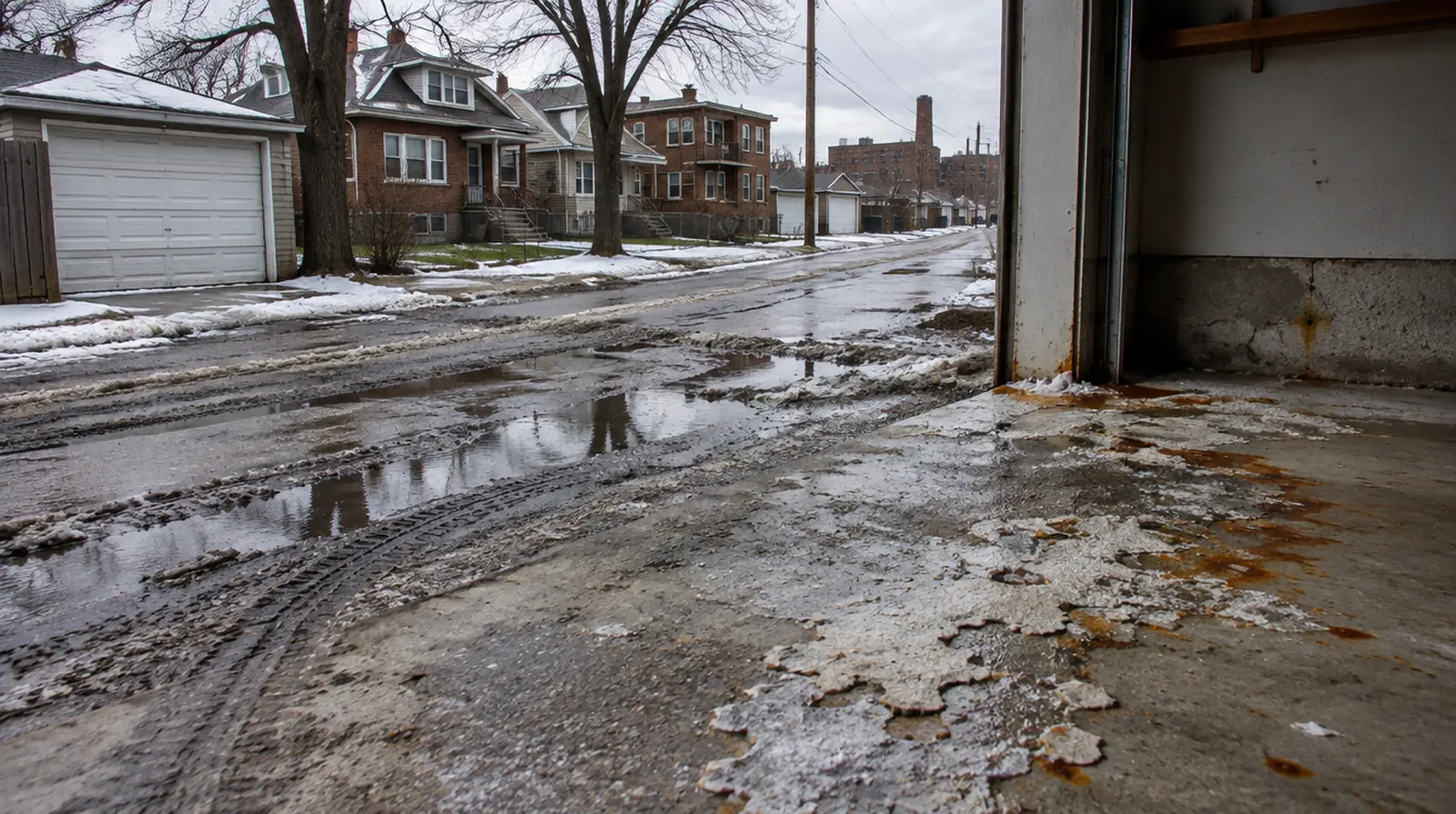
Hot tire pickup
Hot tires coming off the road soften thin coatings and pull them off the floor. Store-bought kits are especially vulnerable. Our systems use proper grinding and build enough thickness that tires sit on a hard surface without lifting it.
Color and finish options
Solid gray, tan or charcoal gives a clean look. Full broadcast flake hides salt residue and dirt best. Quartz broadcasts give a heavy-duty textured finish for workshops. Sample boards help you choose in your own garage light.
Drainage and slope
Many older garage slabs slope poorly or not at all, so meltwater pools in the middle. During preparation we look at how water moves across the floor. We can adjust low spots with patching mortar and recommend a floor squeegee and simple habits, like knocking snow off wheel wells outside, that keep brine from sitting on the surface.
How long it takes
Most two-car garages finish in two to three days with epoxy, or one to two with polyaspartic topcoats. Walking is usually fine the next day. Vehicles can return after a few days, depending on temperature.
Cost factors
Size, repair needs, coating removal, finish type and temperature control all affect price. Garages with heavy scaling need more repair material and labor. We provide itemized estimates so you can see what each step costs.
Caring for the floor in winter
Squeegee meltwater out frequently. Rinse salt residue every couple of weeks with water and a neutral cleaner. Wipe oil and fluid spills promptly. Place mats where you step out of the car. In spring, give the floor a thorough wash to remove the season's buildup.
Questions
Will it crack in the cold? Coatings move with the slab. Existing cracks may reappear if the slab moves, but our crack treatment limits that.
Can you coat over old paint? No. We grind it off first.
Can I park on it the first winter? Yes, once it has cured. Salt does not harm a cured coating.
Is it worth it on an old slab? If the slab is structurally sound, coating it protects it and extends its life.
Get a garage floor estimate
Call (219) 529-1796 for a free estimate.